
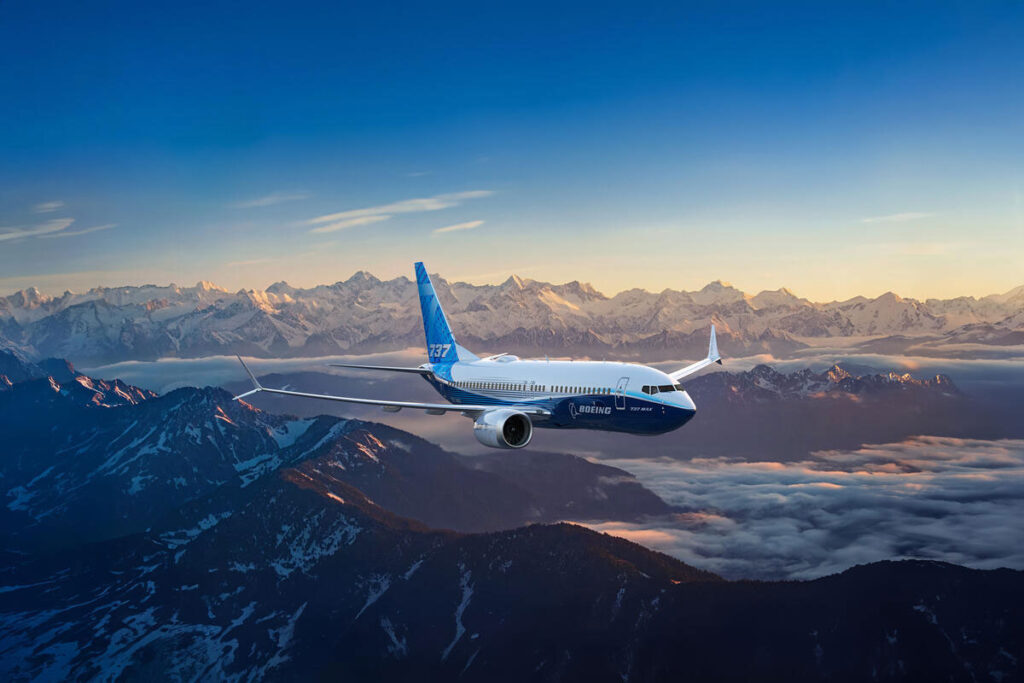
Last Monday, August 3, U.S. aircraft manufacturer Boeing announced the certification of its new long-range commercial aircraft, the Boeing 737 MAX 7, following an extensive testing period conducted in conjunction with the U.S. Federal Aviation Administration (FAA). Boeing highlighted the aircraft’s range of more than 7,040 kilometers—the longest of any aircraft in its narrow-body family—which allows it to compete with models such as Europe’s Airbus A321XLR, whose range exceeds 8,700 kilometers.
At first glance, this appears to be an extraordinary achievement of modern aeronautical engineering—one that should make us all pleased and proud. However, as an airline pilot, I have observed a troubling trend: the increasing duration of flights operated by a standard crew of only two pilots.
Since the beginning of transcontinental and transoceanic flights—the earliest examples of what is now known as long-haul operations—these routes have generally been flown by the largest aircraft available, commonly referred to as wide-body aircraft. The Boeing 747 and Airbus A380 are among the best-known examples. Because of the considerable space available aboard these aircraft, manufacturers incorporated spacious crew-rest areas into their designs. This allowed airlines to use augmented flight crews, consisting of one or two additional pilots, so that crewmembers could take scheduled rest periods during the flight.
New Technologies
During the 1960s, when the first commercial jetliners began crossing the skies with aircraft such as the Boeing 707, nonstop transoceanic and transcontinental flights became possible, particularly across the continental United States and between North America and Europe.
Initially, these flights were operated by four-engine aircraft such as the 707. Technological progress eventually led to the development of three-engine aircraft such as the DC-10. By the end of the 1970s, airline growth had increased competition and expanded the traveling public. Airlines were therefore seeking not only to cross the Atlantic Ocean, but also to reduce their operating costs.
This gave rise to a new branch of commercial air transportation, particularly following the 1977 certification of the Airbus A300, the first twin-engine wide-body aircraft. It was designed to conduct long-haul flights across continents and oceans. Operational regulations initially required these aircraft to remain within 60 minutes of a suitable alternate airport when flying over water. However, following the certification of the Boeing 767 in 1982 and subsequent regulatory changes in 1985, twin-engine passenger aircraft were permitted to operate as far as 120 minutes from a suitable alternate airport. This opened the transatlantic market to a new category of aircraft and gradually eliminated the need for the four-engine and three-engine aircraft that had dominated previous decades.
In the modern era, the emergence of low-cost airlines and the extraordinary growth of air transportation—from approximately 892 million passengers in 1985 to around 9.8 billion passengers in 2025—have once again intensified competition among airlines worldwide, prompting them to pursue further reductions in operating costs. This growth, combined with advances in the use of composite materials and other high-performance technologies, has led to the development of new engines, wings, fuselages, and highly efficient aircraft components.
The result is a new generation of twin-engine aircraft that are significantly smaller than those introduced in 1985. At the same time, manufacturers and airlines have sought to minimize every possible amount of space and weight aboard these aircraft. This has resulted in the elimination of dedicated rest areas for augmented crews and has pushed some operations toward the limits of both safety and regulatory compliance.
Rest Regulations
Human factors have always played a major role in aviation safety. Following hundreds of accidents in which fatigue was identified as having significantly affected pilot performance, regulatory authorities around the world began adopting rules requiring appropriate rest facilities for augmented crews operating long-haul flights.
In the United States, the February 2009 crash of Colgan Air Flight 3407 had a particularly significant impact on pilot rest and fatigue regulations. It contributed to the establishment of Federal Aviation Regulations Part 117, known as FAR 117 and adopted in the Dominican Republic as RAD 117. These regulations established not only the minimum rest periods required between pilot assignments, but also different rest requirements based on changes in time zones, as well as standards for the different types of onboard rest facilities that must be provided to augmented crews on long-haul flights.
The Major Challenge
As this new generation of smaller aircraft with considerably greater range than their predecessors enters the market, crew rest has become a global concern. Ultra-low-cost airlines around the world have begun acquiring these aircraft and offering long-haul flights using standard crews of only two pilots, thereby operating at the maximum limits permitted by law.
This has led regulators such as the European Union Aviation Safety Agency (EASA) and the Dominican Civil Aviation Institute (IDAC), among others, to relax crew-rest regulations so that airlines may schedule pilots beyond the normally established limits. Such changes have not been adopted in countries such as the United States, where pilot unions have played a key role in preserving operational safety standards.
Regulators permitting these deviations have done so through a relatively new program known as a Fatigue Risk Management System, or FRMS. Under this approach, it is argued that providing pilots with additional rest before and after a flight allows them to operate beyond the limits established by regulations such as FAR 117—or RAD 117 in the Dominican Republic. In the Dominican case, however, no scientific or statistical analysis supporting this approach has been presented.
The issue has become a common topic of discussion among pilot colleagues from different countries, particularly among those who experience it firsthand in their daily operations. They conduct long flights—sometimes at night and sometimes under highly demanding conditions involving ocean crossings, severe weather, or other operational challenges—and must remain sufficiently awake and alert to conduct an approach and landing on the other side of the planet without having rested. Beside them is only one other pilot, who is probably just as fatigued. The economics of aviation, driven by the growth of the airline industry, have encouraged technological developments that make these new operations possible. Nevertheless, the human being at the controls remains the same. It is our responsibility to understand those human limitations and avoid demanding more than pilots can safely provide.