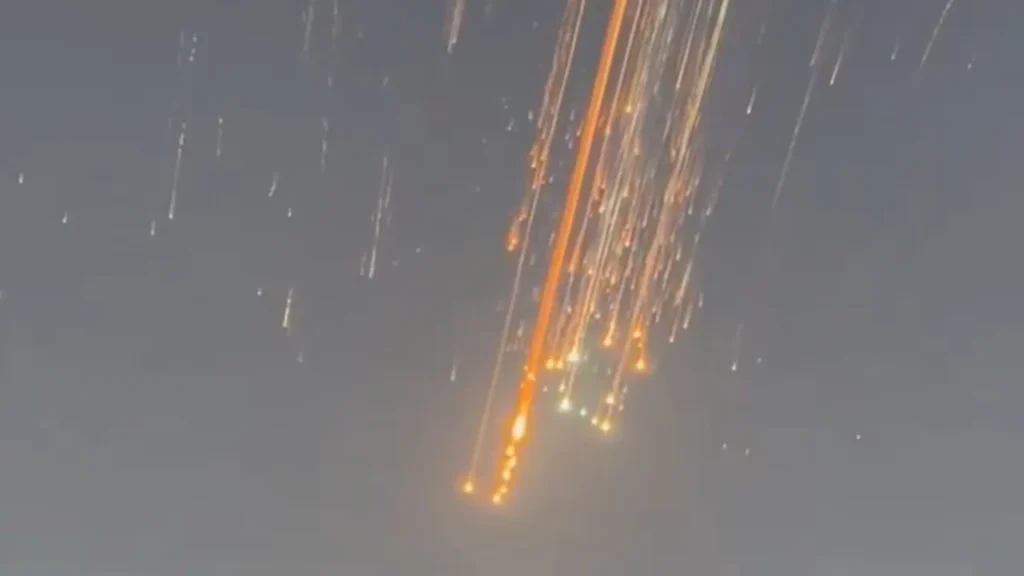
The launch of a space rocket has always been viewed as a major scientific milestone and a symbol of humanity’s technological progress. As these events become increasingly frequent, the importance of effective coordination with aviation operations that may be affected also increases. Such was the case on January 16, 2025, when the explosion of a U.S.-based SpaceX rocket clearly placed several commercial flights in our region at risk due to the manner in which the situation was handled.
This incident is compounded by ongoing concerns regarding how the investigation was conducted and ultimately closed, without a clear mandate for improvement. Our country must remain attentive to the development of this technology in our region and must establish its own monitoring team and airspace control protocols.In today’s article, we will outline some of the weaknesses in the U.S. oversight structure and present our recommendations for Dominican authorities.
Institutional Oversight Structure
The United States is at the forefront of global space operations, having recently developed a robust commercial space launch industry. In the past, these activities were almost entirely the domain of government agencies, operating under strict operational codes and state oversight. With the emergence of private companies in this sector, that supervisory framework has gradually loosened. In the case of commercial space launches, the U.S. government agency responsible for oversight is the Federal Aviation Administration (FAA), whose primary responsibility is to ensure public safety. To this end, the FAA establishes oversight protocols during the various launch phases and requires companies to maintain a direct, official line of communication.
In addition, the FAA works with the launching company to determine which areas may pose a risk to commercial aviation due to falling debris, depending on the point at which a rocket may fail during ascent. These zones are known as “debris response areas” and constitute temporary flight restriction areas due to the extremely high risk of debris colliding with aircraft in flight.
When these areas are activated, air traffic controllers are required to instruct pilots operating in those zones to immediately exit them or avoid them altogether if they are part of their planned route. However, pilots and dispatchers do not necessarily know in advance where these areas will be established, complicating fuel planning and regulatory compliance during pre-dispatch.
Recent Explosions
On January 16, 2025, at 5:37 p.m., the sky over the northern Caribbean Sea lit up with the glow of thousands of fragments from a space rocket following its explosion just minutes after launch. The vehicle was the massive Starship Block 2 rocket—403 feet tall, the largest and most powerful rocket ever built—owned by U.S. company SpaceX and launched from its facility in Brownsville, Texas. This was its seventh launch, conducted as a test of its Starlink satellite deployment system and post-launch booster recovery. At 7 minutes and 39 seconds (T+07:39), the rocket’s engines began to fail, followed by a loss of telemetry and communications at T+08:26, and a total loss of the vehicle at T+11:23. At the time, the vehicle was approximately 93 miles above Earth and traveling at about 13,245 miles per hour.
Initially, SpaceX did not inform the FAA of these failures. Instead, the FAA became aware of the rocket’s disintegration through reports from pilots in the region who began describing visual contact with a large explosion in the sky and requesting information about potential debris impact zones. As a result, at T+12:26, the FAA initiated its “debris response area” protocol. One zone extended from the Texas launch point to a location parallel to Havana, Cuba, and a second zone from a point parallel to Holguín, Cuba, to the island of Saint Martin in the Lesser Antilles. These zones covered a total distance of 2,300 miles and passed directly north of the Dominican Republic.
The designation of two separate debris response areas, with a 300-mile gap between them through which air traffic continued normally, was not due to that gap being safe for flight. Rather, it was because the FAA lacked radar coverage in that region.
Affected Flights
Approximately 240 flights were affected by this incident. Of these, about 171 were delayed on the ground, 28 were forced to divert to alternate airports, and 40 entered holding patterns averaging 20 minutes or more. The FAA’s report on the incident states that the risk to these aircraft was “potentially catastrophic.”At the time, JetBlue flight 561 and Iberia flight 379 were preparing to begin their descent and approach into Luis Muñoz Marín International Airport in San Juan, Puerto Rico. Both aircraft were informed of the situation by San Juan air traffic control (ATC) and instructed to enter holding patterns while debris continued to fall—an event that can last up to an hour.
After several circuits in the holding pattern, with low fuel reserves and only open ocean behind them outside the debris zone, both aircraft began requesting permission from ATC to cross the affected area. ATC informed them that doing so would be at their own risk and that they would need to declare an emergency. Faced with the choice of risking falling debris or ditching into the sea, both aircraft declared emergencies and crossed the debris response area, placing approximately 450 people at risk in the process.
Simultaneously, the New York Air Route Traffic Control Center, responsible for much of the air traffic over the western Atlantic, was operating in emergency mode, rerouting aircraft to avoid the debris zone. This resulted in a significant increase in controller workload, leading at one point to a loss of situational awareness involving two aircraft that nearly collided.
Internal Government Disputes and Potential Conflicts of Interest
The election of Donald J. Trump as President of the United States in November 2024, and his inauguration in January, had a profound impact on how U.S. authorities regulate aerospace companies. The new administration’s policy includes accelerating the privatization of many space services used by the United States. At the center of this shift is SpaceX, led by the controversial Elon Musk, one of Trump’s principal campaign donors. In addition to being a business executive, Musk also served as a government official, acting as director of the newly created Department of Government Efficiency (DOGE).
This proximity to the White House raised numerous conflict-of-interest complaints, as SpaceX continued to secure new government space service contracts while Musk held public office. One of the main concerns has been the approval process for SpaceX rocket launch permits, particularly following the January and March explosions. At the time of the January 16 explosion, the Trump administration had not yet taken office (its term began on January 20). Following the incident, an investigative commission was appointed but later dissolved before issuing its final report.
Compounding this situation, one of DOGE’s first actions was to cut staff at the FAA—the very agency responsible for overseeing and regulating SpaceX’s launches and conducting the investigation into the January explosion. This led to internal controversy within the FAA over whether to authorize a new launch in March, given the significant risk posed to international civil aviation during the January event. Members of the FAA investigation committee openly opposed granting the permit, but governmental pressure ultimately led to its approval. Like the previous launch, it ended in another Starship explosion, once again impacting commercial air operations over the Gulf of Mexico and the Caribbean, including the Dominican Republic.
By May, the special commission had reportedly gathered sufficient evidence to conclude that these explosions pose a serious risk to commercial aviation and that extreme caution should be exercised when approving new launch permits.
A More Permissive FAA Administrator
In March, President Trump nominated Bryan Bedford as the new FAA Administrator. He was confirmed by the Senate and sworn in during July of this year. Bedford, a strong proponent of deregulation in the space industry, has publicly stated that regulatory barriers should be removed and space launch licensing accelerated. One of his first actions as Administrator was to close the FAA’s investigation into the January explosion before the commission had completed its final report.
This decision prompted an almost immediate backlash from much of the U.S. aerospace industry, which criticized the relaxation of operational safety standards. Retired FAA regulators noted that they would take issue if an aircraft manufacturer or airline were to halt its own safety investigation before implementing necessary improvements—precisely what occurred in the SpaceX case.
The Dominican Response
Given the clear conflict-of-interest situation within the U.S. government on this issue, the Dominican Republic must focus on creating its own oversight, monitoring, and response body for space launches. The project proposed by Major General Carlos Febrillet, FARD, to establish a National Commission for Space Affairs (CNAE) should be expedited. This body should include a high-level technical team tasked with advising and representing the Dominican government in matters related to these events.
This team must work closely with the Dominican Civil Aviation Institute (IDAC) to develop response protocols for such contingencies and establish a direct line of communication with both the FAA and the launching company. In addition, the Dominican Republic must accelerate the specialization of professionals in space-related fields and establish close working relationships with allied countries, both within the region and beyond. At present, we cannot rely solely on the FAA—especially given its internal challenges on this issue. Commercial aviation is a pillar of the Dominican economy, and any threat to its safety must receive the highest level of attention from the Dominican government.