The Dominican Constitution expressly establishes that the national territory is not limited solely to its land and maritime surface, but also includes the airspace as an integral part of the State’s sovereignty.In particular, Article 9 of the Constitution of the Dominican Republic, in its paragraph 3, provides that:
“The territory of the Dominican Republic is inalienable. It is composed of the eastern part of the island of Santo Domingo, its adjacent islands, the territorial sea, the seabed and subsoil; and, in its paragraph 3, the airspace above the territory, the electromagnetic spectrum, and the space in which the State operates.”
This constitutional mandate makes clear that airspace is not an abstract concept, but rather a direct extension of the national territory, fully subject to the jurisdiction and responsibility of the Dominican State. Although the country exercises full control over its land territory and its territorial sea (up to 12 nautical miles), there are limitations derived from international law, particularly in contiguous zones and in air corridors used by international aviation. These constraints, combined with technological and operational gaps, have historically hindered the effective exercise of control over national airspace.
Consequently, the discussion of air sovereignty is not purely legal, but also operational in nature: it entails the State’s actual capacity to monitor, identify, and act within the space that the Constitution recognizes as its own.
In a deep and revealing conversation that brings together operational experience and strategic vision, Capt. Francisco Díaz and political leader and academic Pellegrín Castillo analyze one of the most sensitive—and least understood—issues in Dominican national security: control of the airspace.
As Castillo explains, sovereignty in practice is not absolute. International law introduces limitations, particularly in contiguous zones and in air corridors used by global aviation. These constraints, combined with structural weaknesses—technological, institutional, and operational—have historically prevented the effective exercise of control over the airspace that the Constitution recognizes as sovereign.
Far from being a purely technical matter, the discussion makes clear that control of airspace has become a central element in defending the State against transnational crime, geopolitical tensions, and emerging technological threats. In a world where physical borders are increasingly porous, true territorial control begins in the skies.
A System Under Pressure
The turning point in this issue dates back to the mid-2000s, when intelligence reports began to reveal the scale of illicit trafficking using the Dominican Republic as a transit hub. According to Castillo, maps and imagery were presented showing the constant movement of aircraft and vessels toward the country, in a pattern that exceeded the State’s control.
The situation was alarming. Aircraft were entering Dominican airspace with their transponders turned off, making identification impossible. In many cases, they carried out drug drops at sea, along coastal areas, and even on highways. Existing infrastructure, designed primarily for civil aviation, was not prepared to detect this type of activity. This was not a theoretical risk, but an operational reality that placed the country in a position of significant vulnerability.
The Technological Gap
One of the most critical aspects identified in the discussion is the fundamental difference between civil and military surveillance systems. Secondary radar, used in civil aviation, depends on the cooperation of the aircraft. It operates through an interrogation-response system with the aircraft’s transponder, allowing identification, altitude, speed, and position tracking. However, if the transponder is turned off—as frequently occurs in illicit operations—the aircraft effectively disappears.
By contrast, primary radar, used in military environments, does not depend on cooperation. It detects any object in the air through signal reflection, making it an essential tool for air defense and interdiction. The country’s historical reliance on civil systems has left it with significant limitations in addressing non-cooperative threats, highlighting a critical technological gap.
Faced with this reality, the Dominican State developed a comprehensive strategy aimed at regaining control of its airspace and maritime domain. This strategy included the acquisition of interdiction aircraft such as the Super Tucano, the installation of three-dimensional primary radar systems, and the creation of a legal framework to enable interception operations under the principle of legitimate self-defense of the State. The logic was clear: detect, intercept, and deter.
However, this vision was never fully realized. Although equipment was acquired, implementation remained fragmented. The legal component—essential to support operational actions—encountered resistance. At the same time, internal political factors and international pressures hindered the consolidation of the system. The result was a structure that was partially functional but strategically incomplete.
Geopolitics and Conditional Sovereignty
One of the most revealing elements of the analysis is the weight of geopolitics in national security decisions. Attempts to approve legislation enabling aerial interdiction operations—similar to those implemented in countries such as Colombia and Peru—generated adverse reactions internationally. According to Castillo, diplomatic warnings were even issued regarding potential repercussions for relations with the United States.
Following the September 11 attacks, U.S. strategic priorities shifted toward counterterrorism. In that context, anti-narcotics efforts in the Caribbean lost relative prominence, even as trafficking routes expanded into the region. The Dominican Republic was thus left in a complex position, facing growing threats while its room for action was constrained by external interests.
The ongoing conflicts in Ukraine and the Middle East have introduced us to a new style of warfare in which the use of low-cost drones, as well as radars for their detection, has become a preferred tool for both offense and defense. On a daily basis, we see how low-cost Iranian kamikaze drones crash into targets in cities such as Dubai and Doha, while radar-guided defense systems intercept them. For us in the Dominican Republic, this may seem like something distant, something we do not need to worry about, but when we analyze the capabilities and planning of our authorities, we realize that we are completely exposed.
Use of Dominican Ports and Airports by International Crime
Throughout his remarks, Castillo repeatedly returns to one of the central vulnerabilities: limited control over the massive flow of tourists entering the country. In a critique of President Abinader’s open tourism policy, Castillo points to recent U.S. visa restrictions imposed on nearly one hundred countries—many of which, he notes, have had visa requirements waived by the Dominican Republic as part of its tourism expansion strategy. In his view, this exposes the country to being used as a transit point—or even an entry hub—for dangerous actors linked to international crime and terrorism.
As part of this argument, Castillo references past cases in which funds used for the September 11, 2001 attacks were traced back to the Dominican Republic. He also mentions the terrorist attacks against Charlie Hebdo in Paris, noting that some members of that cell had been present in the Dominican Republic days before the attack.
He further explains how drug cartels have historically used major Dominican ports, including Punta Caucedo and Haina, as transshipment points for narcotics moving primarily from South America to Europe. This led to the country being classified as a significant drug trafficking hub by both the European Union and the United States. In response, the Dominican government implemented more aggressive intervention policies at ports and airports, along with enhanced inspection and intelligence procedures across logistical chains.
Use of Drones in Haiti
One of the most critical points raised in the conversation is the use of drones in Haiti. During the operation to assassinate Haitian President Jovenel Moïse, drones were reportedly used in support of the mission. Additionally, it has been identified that Haitian gangs have trained in the use of drones, prompting U.S. contractors assisting in countering these groups to also deploy drone technology offensively.
As in other regions with a strong presence of organized crime, such as Mexico and Colombia, Haiti has become an attractive operational base for these organizations. Political instability and the absence of effective government control create ideal conditions for illicit activities. The introduction of low-cost drone technology—already used by cartels in other parts of Latin America—adds a new layer of concern for the Dominican Republic.
II- Venezuelan crisis
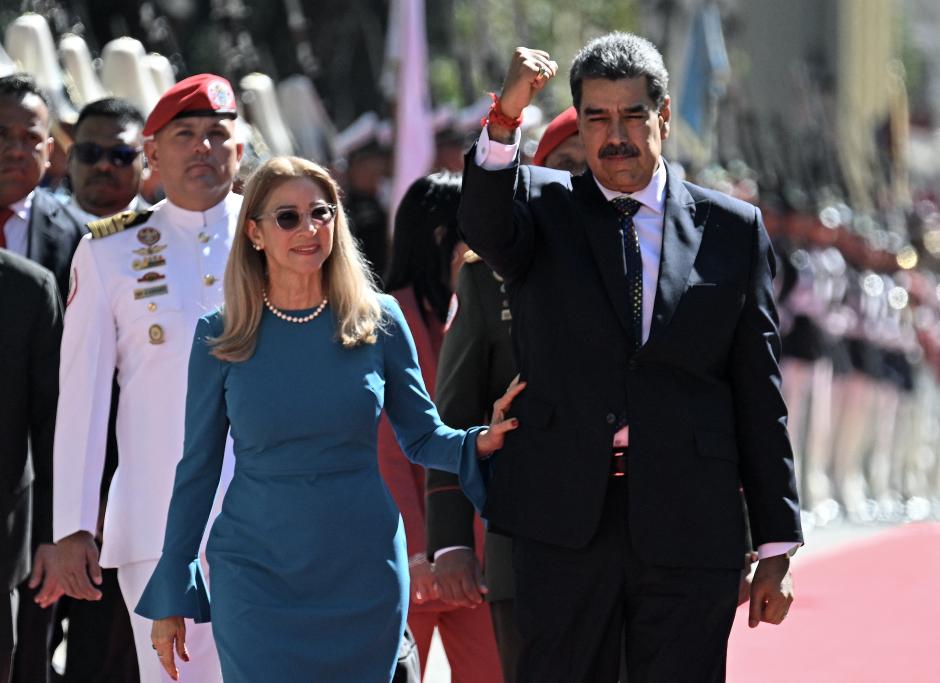
Since the end of last year, the Caribbean region experienced the tension of having the largest naval fleet in decades deployed in its waters. This was the U.S. deployment aimed at pressuring the government of Nicolás Maduro in Venezuela to relinquish power and step down peacefully. When that did not occur, President Trump ordered a military incursion into Venezuela and the arrest of Maduro.
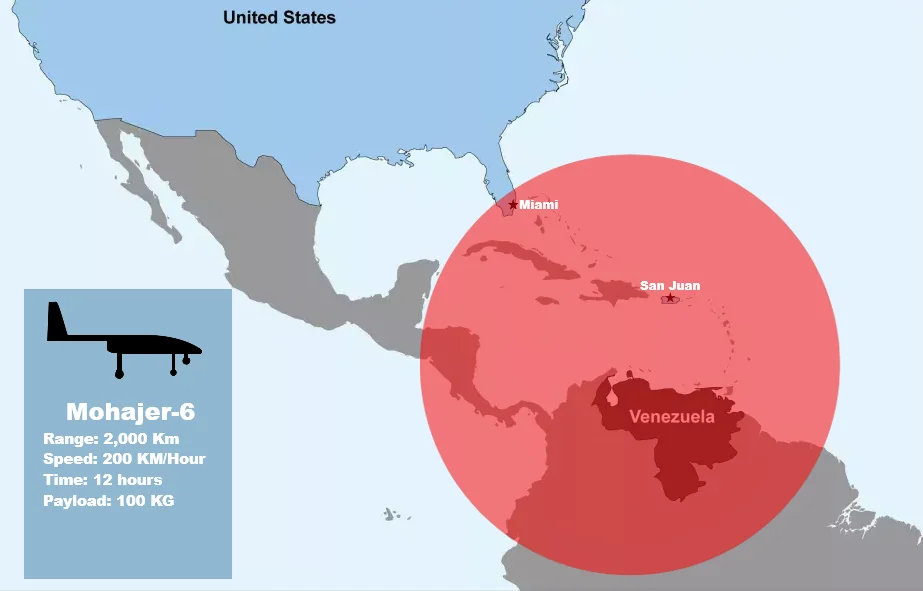
Although we provided some logistical support by allowing U.S. tanker aircraft to use Las Américas International Airport (AILA), the conflict with Venezuela was still perceived as something distant. However, behind the scenes there was concern within aviation and defense circles that Venezuela could adopt a strategy similar to the one Iran uses today—launching drone attacks against U.S. allied countries in the region, such as the Dominican Republic. This concern is not unfounded, as Venezuela has reportedly acquired Iranian drones designed for offensive military use, similar to those currently used in the Middle East conflict.
Venezuelan drone program
In 2006, the Bolivarian Republic of Venezuela signed a technical-military cooperation agreement with the Islamic Republic of Iran, which included the transfer of drone technology, training, and components. The Iranian drone manufacturer Qods Aviation Industries, creator of the Mohajer-2, supplied Venezuela with the first drone assembly kits. According to the Miami Herald, in 2009 a secret drone assembly program began in Venezuela, producing the Venezuelan model Arpía-001, a direct derivative of the Iranian Mohajer-2. In June 2012, then-President Hugo Chávez publicly presented details of the program, initially claiming it was for peaceful purposes, primarily surveillance.
In 2020, the Venezuelan government created Empresa Aeronáutica Nacional S.A. (EANSA), responsible for the country’s drone manufacturing program. Together with Iran, this program evolved into the production of attack drones, including the ANSU-100 and ANSU-200, capable of air-to-ground strikes and designed with low detectability. However, the most alarming capability acquired for the region is the development of platforms inspired by long-range loitering munitions, similar in concept to Iranian systems like the Shahed series, which are designed for long-distance strike missions and have been widely used in modern conflicts. (Army Recognition)
According to available analyses, Venezuela has developed and displayed systems such as the ANSU-200—modeled after advanced Iranian drone designs—alongside other platforms influenced by Iranian loitering munitions concepts, signaling a shift toward asymmetric warfare capabilities in the region. (taskandpurpose.com).
Dominican Vulnerability
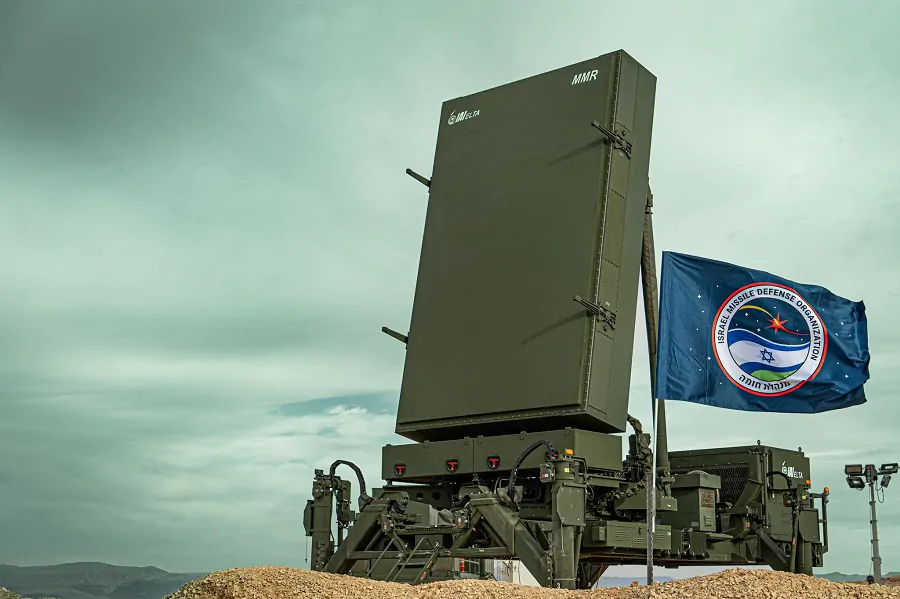
The Dominican Republic and Venezuela are separated by only 687 km across the Caribbean Sea, placing them in close proximity in terms of military aircraft operations. For decades, our country has faced challenges in physically and electronically safeguarding its airspace, as it lacks primary military radars and an air force capable of covering the entire national airspace (our air force aircraft are limited to low altitudes and speeds, as we do not have military jets). More than a decade ago, the need for military radars was identified as part of an airspace control strategy to combat drug trafficking, and an initial unit was acquired from Israel, but it was never installed. To this day, the country has only three primary/secondary civil-use radars, designed for air traffic control—not for detecting illicit aircraft or military drones.
This is compounded by the lack of interoperability between the Dominican Republic Air Force (FARD) and the Dominican Institute of Civil Aviation (IDAC), which operates those radars and employs air traffic controllers. As an airline transport pilot, I find it remarkable that in such dense airspace as the Dominican Republic’s, there is no link between the IDAC’s national air traffic control center and the FARD.
During the recent crisis between Venezuela and the United States, which created moments of tension in the Caribbean, professional circles of Dominican pilots discussed the possibility that Venezuela could use its ANSU-200 drones against civilian targets in U.S.-allied countries in the region as a form of retaliation (similar to what is currently seen between Iran and Persian Gulf countries, or between Russia and European nations). In the case of the Dominican Republic, the concern was greater, since—as explained—we lack a detection system for such drones, and the United States did not install one in the country during the deployment of its tanker aircraft at Las Américas International Airport (AILA). We do not even have a plan of action for managing civil air traffic in the event of such an attack, despite having the busiest airport in the Caribbean (Punta Cana).
The argument of support from the U.S. fleet
During many of these technical discussions, some argued that U.S. armed forces, as allies of our governments, would protect us in the event that Venezuela retaliated using drones. This was generally countered with the argument that U.S. forces are primarily focused on defending themselves, not their allies. Moreover, detecting and intercepting these small drones requires being almost directly along their flight path, as they are not only small but also fly at very low altitudes.
These theories have been demonstrated in the current Middle East conflict. Even with a much larger deployment (it is estimated that half of the U.S. Air Force and a third of its Navy are deployed in the Middle East), they have not been able to fully stop Iranian kamikaze drone attacks across the Persian Gulf. What has helped significantly is that each country has its own detection and interception systems.
New Dominican Aeronautical Industry
The creation of a new Dominican aerospace industry through a government trust initiative led by President Luis Abinader represents a potential paradigm shift. As demonstrated by the assembly of the TP-75 DULUS aircraft, the country has the capability to produce its own platforms.Following the Venezuelan example, efforts should now focus on the development of surveillance and defense drones, as well as on detection and counter-drone strategies, similar to those employed in current conflicts in the Middle East and Ukraine. These capabilities are best developed when supported by domestic knowledge in design and manufacturing.
Airspace is no longer an exclusively aviation-related domain; it has become a strategic arena where organized crime, technology, and geopolitics converge. The Dominican Republic possesses the necessary elements—geographic position, human capital, and technical expertise—to exercise control over its skies. However, the gap between potential capability and operational reality remains significant.
Although, fortunately, the country was not directly affected by Venezuelan drone activity—due in part to the rapid and decisive U.S. intervention—the experiences of pilots operating in the Persian Gulf under the threat of kamikaze drones serve as a stark reminder of our vulnerability. This is a threat that, given its accessibility and reach, becomes more real with each passing day. The conversation between Capt. Díaz and Pelegrín Castillo leaves a clear lesson: sovereignty is not declared—it is exercised. And in the 21st century, that exercise inevitably begins in the air.