The first 72 hours after the collapse of a structure trapping people are known as the “golden rescue window.” Beyond this period, the chances of finding survivors progressively decline due to dehydration. For this reason, the United Nations’ International Search and Rescue Advisory Group (INSARAG) bases its rapid deployment operations within this critical timeframe.
Modern international disaster response efforts are built around Urban Search and Rescue (USAR) operations, established in 1991 as the international gold standard for this type of mission. In these emergency deployments, aviation plays a fundamental role, providing the fastest means of transportation.
The Dominican Republic has itself benefited from international emergency deployments. During recent national disasters, such as the Jet Set building collapse and Hurricane Georges, foreign teams participated in search and rescue operations. Likewise, the country has trained small Urban Search and Rescue (USAR) teams, as well as specialized forest and maritime rescue units. Among them, the HURÓN unit of the Santo Domingo Fire Department is recognized as the country’s most experienced and best-prepared team for rescues involving collapsed structures, such as those caused by earthquakes like the one that struck Venezuela on June 24.
The Initial Disaster and the Dominican Response
At 6:04 p.m. local time (22:04 UTC) on June 24, a magnitude 7.2 earthquake struck Venezuela’s Yaracuy State. Just 39 seconds later, it was followed by a second magnitude 7.5 earthquake in the same region but with a different epicenter. The greatest destruction occurred in La Guaira, approximately 160 kilometers (100 miles) east-northeast of the epicenters.
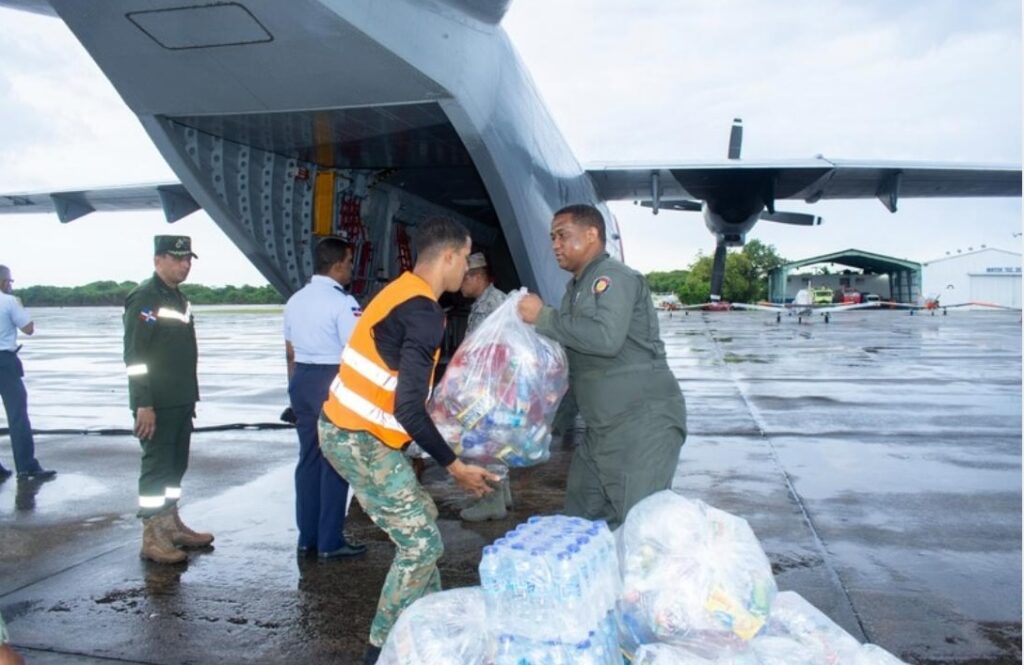
About 20 hours later, on the afternoon of June 25, a C212 Aviocar aircraft of the Dominican Republic Air Force (FARD) departed from San Isidro Air Base carrying nine rescue personnel and light equipment from the Specialized Emergency and Disaster Mitigation Corps (CEMED) of the Dominican Ministry of Defense (MIDE).
Both Venezuelan and Dominican authorities announced that this team was among the first international responders to arrive, a fact proudly repeated by Dominican and foreign media outlets. On June 28, a second CEMED rescue team was deployed, bringing the total Dominican contingent to 22 personnel.
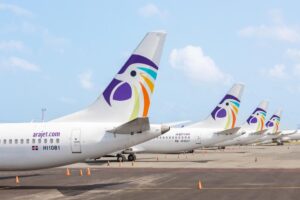
However, the FARD’s C212 (one of only three in service) is a light transport aircraft designed for short-range missions with limited personnel and cargo capacity. Its capabilities are vastly different from those of the large aircraft operated by the Dominican Republic’s newer commercial airlines, such as Arajet’s and Skyhigh’s Boeing 737s or Air Century’s Canadair Regional Jets (CRJs). While the Air Force’s three C212s together provide roughly 12 passenger seats and a combined cargo capacity of approximately 2,700 to 2,950 kilograms, the country’s commercial airlines collectively offer nearly 3,600 passenger seats and tens of thousands of kilograms of cargo capacity.
Our team immediately began contacting Dominican airlines to determine whether aircraft were available to support this operation. While the initial gesture of dispatching a C212 with a small CEMED team was appreciated, it was clear that such a deployment would have only a limited operational impact. Even the smallest standard USAR teams require between 26 and 30 highly trained and experienced personnel, equipped with the specialized gear necessary to conduct rescue operations.
The Agony of Inaction
After identifying the HURÓN Fire Department unit as the country’s best-prepared team for this mission—and confirming that Dominican commercial airlines had the airlift capacity to transport them—we initiated a series of calls and efforts with Dominican authorities to organize their deployment.
The team, composed of volunteers, was ready to depart. All that remained was for the government to coordinate the necessary logistics. However, after speaking with several government officials, it became evident that this was not considered a priority, and over time our efforts gradually lost momentum.
Meanwhile, countries with far less airlift capacity than the Dominican Republic, such as El Salvador, chartered numerous flights from foreign airlines and deployed hundreds of USAR rescuers along with tons of equipment and humanitarian aid.
It was astonishing to watch countries located much farther from Venezuela than the Dominican Republic—which lies only about 600 miles away—dispatch all types of USAR personnel and equipment, while we, despite possessing the largest civilian air fleet in the insular Caribbean, limited our contribution to a single C212 aircraft and a handful of rescuers.
Finally, on Monday, June 29, a Skyhigh Embraer 190, chartered by the Dominican Ministry of Foreign Affairs (MIREX), flew to Venezuela to repatriate a group of Dominican citizens. Yet the outbound flight was not used to transport the HURÓN rescue team from the Santo Domingo Fire Department.
Our team has proposed the creation of a Civil Reserve Air Fleet (CRAF) program similar to that of the United States, in which the structure and procedures for employing commercial airlines during national and international emergencies are established in advance. Such a program would significantly enhance the country’s airlift capabilities. However, for it to succeed, it requires more than plans on paper—it also requires the willingness of national leaders to put those plans into action.