
The war in the Middle East has created an enormous challenge for the global aviation industry, with fuel prices and supply becoming major headwinds to progress. In Europe, airlines such as Lufthansa have been forced to cancel tens of thousands of flights because of this crisis, while European authorities prepare for potential fuel supply shortages by the end of the summer if the Strait of Hormuz remains closed.
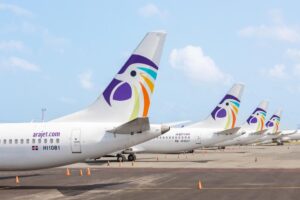
Amid this storm of challenges, the Dominican Republic has embarked on the development of its national aviation industry, with the government’s unwavering support for local airlines such as Arajet and Skyhigh Dominicana. The government has also pursued new markets through the signing of an Open Skies Agreement with the United States and by promoting the country as a regional air and maritime hub. This effort has cost the government millions of dollars in various forms of subsidies to both airlines and airports, all in an effort to attract new investment to the country.
However, all of this is now at risk as the price of aviation fuel (specifically jet fuel) has doubled compared to the same period in 2025 due to war-related supply disruptions. At the same time, Dominican airlines such as Arajet are entering direct competition with some of the world’s most efficient airlines in the ultra-low-cost market throughout the Americas.
Yet in the midst of this major pricing crisis, the Dominican government has proposed increasing the tax on airline tickets by $10. This move runs directly counter to the recommendations of the International Civil Aviation Organization (ICAO), as established in its policy document, ICAO Doc 8632, which states that increases in air travel taxes have a significant negative effect on the development of air transportation.
ICAO further maintains as a matter of policy that taxes collected from airline tickets should be used solely to improve a country’s air transportation services, rather than to fund other government responsibilities. ICAO studies have concluded that for every dollar added to airline ticket taxes, the national economy loses two dollars due to reduced demand.
The Dominican Republic has already exceeded ICAO’s intended framework in this regard, as its civil aviation agencies have become some of the government’s largest revenue-generating institutions. The Dominican Institute of Civil Aviation (IDAC) ranks as either the third- or fourth-largest revenue collector in the Dominican state, something that runs contrary to the spirit of the ICAO convention.
The level of aviation taxation in the Dominican Republic is so high that when airline ticket prices are compared with regions where such taxes are minimal or nonexistent (such as Europe), the difference is striking. While a ticket between Santo Domingo and Miami can cost a traveler hundreds or even thousands of dollars, largely because of Dominican taxes, the same journey on a similar aircraft within Europe can cost less than one hundred dollars.
This is why organizations such as the Asociación Dominicana de Líneas Aéreas (Dominican Airline Association) have issued statements opposing increases in airline ticket taxes. As they have repeatedly argued, Dominican airlines face a significant competitive disadvantage compared with major North American carriers and airlines from other countries in the region.
The Dominican government must be careful when imposing new taxes because, in the aviation sector, competition is regional rather than local. When a tourist is deciding which country to visit, or when a Dominican living abroad is deciding whether to travel home, the price of an airline ticket is the first economic barrier they must overcome. The government should seek to reduce that barrier, not increase it.