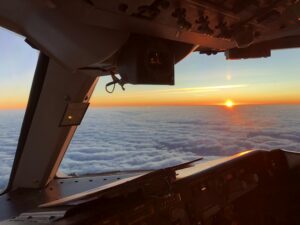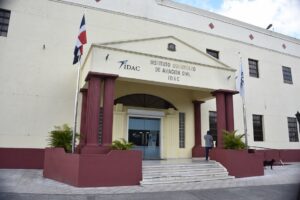
The Captains Council is calling on the Dominican Civil Aviation Institute (IDAC) to review the conditions it proposes to change for night visual flight, publish the data supporting them, and submit the contested provisions to a technical working group with participation from the country’s various pilot organizations.
The request appears in a 50-page analysis, dated November 25, 2026, of proposed Amendment 7 to Dominican Aeronautical Regulation 91. The document acknowledges the hazards of night operations, including the loss of visual references and spatial disorientation, and calls for each new restriction to be linked to a documented risk and an assessment of its effects.
Its main recommendation is to study a nationwide framework for night visual flight based primarily on the U.S. model, adapted to Dominican terrain, infrastructure, and operating conditions. The organization also examines specialized training pathways, such as Canada’s, and regional reforms, such as Argentina’s.
A new corridor with conditions that raise questions
IDAC’s proposal would introduce a corridor between La Isabela and Santiago airports. Using it would require an instrument rating and a minimum altitude of 3,500 feet above mean sea level, subject to the specified exceptions for emergencies or operational separation. The proposal would also add requirements for instrument equipment and equipment for mountainous terrain, and modify the conditions applicable to helicopters and landing sites.
The Council acknowledges the benefit of opening that connection. Its objection centers on the conditions for access and the need to explain why they are the most appropriate means of controlling the risk. The technical distinction matters. VFR stands for visual flight rules, while IFR means instrument flight rules. A pilot can receive training to address nighttime hazards without necessarily acquiring all the privileges of an instrument rating. That distinction underpins much of the report’s international comparison. The analysis also emphasizes that the proposed amendment is not a consolidated regulation. It therefore asks IDAC to publish the applicable text and clarify how the proposed changes relate to existing provisions and any transition period.
The information missing from an assessment of Dominican risk
One of the principal objections concerns statistics. The Council says it has not located a publicly available data series broken down in sufficient detail to identify night VFR operations and associated disorientation incidents, together with their severity, circumstances, and operational exposure. The document acknowledges that IDAC publishes aggregate figures. Its 2025 Institutional Report lists 71 mandatory and 75 voluntary reports for 2024, compared with 119 and 96, respectively, in the 2025 column.
The analysis retains the asterisk accompanying the latter year and asks for clarification of the reporting cutoff and whether the figures are final or provisional. Those figures represent reports processed, not a count of accidents. Nor can they establish, on their own, how many occurrences took place at night, which involved disorientation, or whether a change reflects greater activity or a stronger reporting culture. To illustrate the potential severity of nighttime occurrences, the report cites research from other countries.
An AOPA Air Safety Institute analysis recorded 464 nighttime accidents involving fixed-wing general aviation aircraft in the United States between 2017 and 2021, of which 150 were fatal. The subset occurring in visual meteorological conditions comprised 390 accidents, including 103 fatal accidents, although those conditions do not necessarily mean the aircraft were operating under VFR. The Australian evidence consists of a selection of 36 accidents between 1993 and 2012, including 27 fatal accidents and 58 deaths. In Canada, a March 2026 assessment cited at least four helicopter accidents during night VFR operations and 13 deaths over the preceding ten years.
The Council cautions that the data series describe different populations and lack comparable measures of nighttime exposure for comparing national rates. The absence of accessible Dominican data does not establish that the risk is nonexistent, either. The Council is asking for sufficient information to select measures and subsequently evaluate their effectiveness.
The US model and the experiences of Argentina and Canada
The comparison covers 21 countries and jurisdictions. The first group, identified as the most permissive, incorporates night training into the general private pilot licensing framework and does not universally require a full instrument rating for ordinary night VFR operations. The United States is its principal reference. Argentina is presented as a regional example of a move toward that approach. According to the analysis, its 2025 and 2026 reforms eliminated the separate local night flying rating and expanded the nationwide scope of these operations. The rules examined include night training and transitional provisions for pilots who do not yet hold those privileges. The Council describes the change as a functional convergence with the United States, while retaining Argentina’s own requirements.
The intermediate group comprises countries that require a specific night qualification or training without making a full instrument rating a general prerequisite. Examples include Canada, France, Spain, the United Kingdom, Australia, New Zealand, and South Africa. Canada offers an example of dedicated night training. For private airplane pilots, the framework examined calls for ten hours of night flying, divided between dual instruction and solo flight, and ten hours of instrument instruction. Eligible prior experience may be credited, so those minimums do not necessarily represent twenty additional hours after obtaining a license. Instrument instruction is also distinct from obtaining an instrument rating. Mexico, India, Singapore, and Taiwan illustrate the most restrictive group, where there is no equivalent general authorization for ordinary night VFR cross-country operations and specific exceptions remain in place.
The report clarifies that the grouping compares access requirements and is not a ranking of each country’s safety performance. The review of the International Civil Aviation Organization’s framework is also central: according to the document, Annex 2 leaves the conditions for VFR between sunset and sunrise to the competent authority, without itself establishing either a universal instrument rating requirement or a universal corridor system.
Ambiguities over requirements and operating times
The Council identifies two ambiguities in the proposed instrument requirements. The first concerns the pilot: it asks whether holding the rating would be sufficient or whether the pilot would also have to maintain the recent experience required to exercise IFR privileges, even when the flight remains under visual flight rules. The second concerns the aircraft: The document asks IDAC to define which instruments must be operative, which inspections and checks would apply, and how equipment failures would be handled. It also calls for a verifiable definition of the equipment required for mountainous terrain. The analysis does not interpret these uncertainties as permission to operate with required equipment inoperative.
The discussion includes aircraft with modern avionics, such as electronic displays, satellite navigation, or synthetic vision. The Council proposes evaluating their demonstrable capabilities and limitations, including those of experimental aircraft, while avoiding automatic exclusion solely because they lack IFR authorization. Another disagreement concerns when nighttime requirements begin to apply.
The report records complaints that air traffic control units use sunset, while some pilots believe the requirements should apply one hour later. It cautions, however, that this one-hour interval is associated with a passenger-carrying recency requirement and should not automatically be applied to the general definition of night. The request is to publish the consolidated text and a common interpretation for pilots, instructors, inspectors, and controllers, while also distinguishing aerodrome operating hours.
When bad weather develops inside the corridor
To explain the operational effects, the analysis presents hypothetical scenarios. In one, a pilot encounters cloud or precipitation inside the corridor and delays a preventive decision out of concern about leaving its boundaries. The identified danger is that this perception could pressure the pilot to continue toward adverse conditions. The Council requests clear procedures for seeking route changes, turning back, or using alternatives before the situation becomes an emergency. The document does not claim that there is an absolute prohibition on deviating for safety or that crossing the boundary guarantees a safe solution.
Another scenario describes an airline transport pilot based in Samaná who, following a delay, faces a nighttime return flight from Montecristi. Although the hypothetical includes an instrument rating and instrument currency, a suitable aircraft, a full moon, and clear weather, the conditions for the route and aerodrome still need to be addressed. The analysis identifies daytime operating hours and states that it found no published instrument procedures for that aerodrome.
The maps also examine coastal connections to Puerto Plata, Barahona, and the domestic Cabo Rojo aerodrome. These are presented as possibilities for study, with assessments of visual references, terrain, alternates, and services. The report acknowledges that a visible horizon may be absent over water at night.For medical missions, the concern is having predictable authorizations to transport patients from domestic aerodromes or pick them up by helicopter outside airports. The organization proposes previously assessed sites and timely procedures, while maintaining operator requirements and the safety conditions applicable to each location.
The cost of regulation and the Zero Bureaucracy policy
The economic analysis distinguishes among the affected groups. A pilot who already meets the applicable instrument requirements might face no additional initial cost; another might need training, while an aircraft could require modifications or checks. As a published reference, the document cites a ZOHERGA instrument course priced at US$7,225, plus RD$2,000 in administrative fees, noting that the current validity of those prices must be confirmed. It also presents a calculated scenario of US$11,850, based on another training reference and a hypothetical shortfall in flight hours. Neither amount is presented as a mandatory cost for every pilot or as a complete estimate for upgrading an aircraft.
The Council asks that these effects be incorporated into a regulatory impact analysis comparing costs, benefits, and alternatives. It bases its request on Laws 107-13 and 167-21, the latter amended by Law 14-25, and the corresponding regulatory framework. The report acknowledges that the amendment eliminated the former requirement for approval of the analysis by the Ministry of Public Administration, and directs its request for assessment and reasoned justification to IDAC.
The organization also questions whether the proposed framework is consistent with Burocracia Cero, or Zero Bureaucracy, a policy promoted by President Luis Abinader. In its view, uncertainty about equipment, recent experience, geographical limits, and permits could multiply inquiries and administrative procedures without an adequately explained additional safety benefit. It proposes justifying each burden and identifying responsible parties and predictable timelines.
Aviation tourism and investments that need connections
The review considers the experience of U.S. visitors. The Council regards the United States, including Puerto Rico, as the principal source market for inbound general aviation, while acknowledging that this industry assessment needs support from specific statistics on aircraft movements and origins. The document connects that issue to Dominican promotional efforts at SUN ’n FUN and Oshkosh. Pilots accustomed to the U.S. system need to know about differences in training, operating times, equipment, and routes before traveling. A delay that pushes a departure into nighttime can disrupt planning and reveal conflicting interpretations. The organization proposes bilingual guidance and coordination between the entities promoting aviation tourism and those regulating its operations.
Investment gives the debate a broader dimension. The report identifies construction of the new Cabo Rojo international airport in Oviedo, distinct from the existing domestic aerodrome, and cites February 2027 as the announced target for the start of operations. It also examines Playa Grande in Cabrera, on the north coast, with Alex Rodríguez’s involvement and conditional construction authorization, which is not equivalent to operating authorization. The heliport network adds medical and tourism connections. The national inventory, which includes airports, airstrips, heliports, and projects, contains 70 entries, with 66 locations mapped. In the Council’s view, the use of this infrastructure should form part of the regulatory assessment, although its existence does not automatically establish suitability or authorization for night operations.
A working group that includes differing views among pilots
The final recommendation is to convene a review working group with representative pilot organizations, flight schools, operators, and specialists, under IDAC’s technical coordination. The Council acknowledges differences of opinion and proposes recording them alongside the agreements reached.
The proposal provides for shared access to de-identified information, a review of risks, an economic assessment, and a matrix of responses to comments. It suggests convening the working group within fifteen days of acceptance of the recommendation and using an indicative sixty-day timeframe from the date it is convened.
The final decision would remain with IDAC. The Council asks that adoption of the contested provisions be deferred until the review is completed, without suspending existing safety measures or justified powers to take urgent action. It seeks a regulation whose necessity can be explained through evidence and whose conditions are understandable to those who must comply with them.